Wednesday, February 27, 2013
Return to Albion
Labels: Gretchen Woelfle, research, school visits
Tuesday, February 26, 2013
R is for Rot (or Happy Anniversary)
Sunday, February 24, 2013
Panama Numbers, Panama "Wow!"
Labels: David Schwartz, history, math
Friday, February 22, 2013
Just the Facts, Ma'am
“Just the facts, Ma’am. Just the facts.” Isn’t that what
Sgt. Joe Friday would say on Dragnet?
Actually, no. Sgt. Friday’s actual lines were "All we want are the
facts, ma'am" and "All we know are the facts, ma'am".
The writer's mind is always working - always questioning,
always wondering. Last Saturday night, I sat down for some TV time and the movie Hysteria was on. I love that time frame, the actors in the movie, and
the subject. In my last book, I touch upon the diagnosis of hysteria that was
used to describe the feelings of women in the late 19th century. It’s
a topic that interests me, so I settled down to spend a few hours watching the
movie.
The beginning of the movie starts with “1880” at the bottom
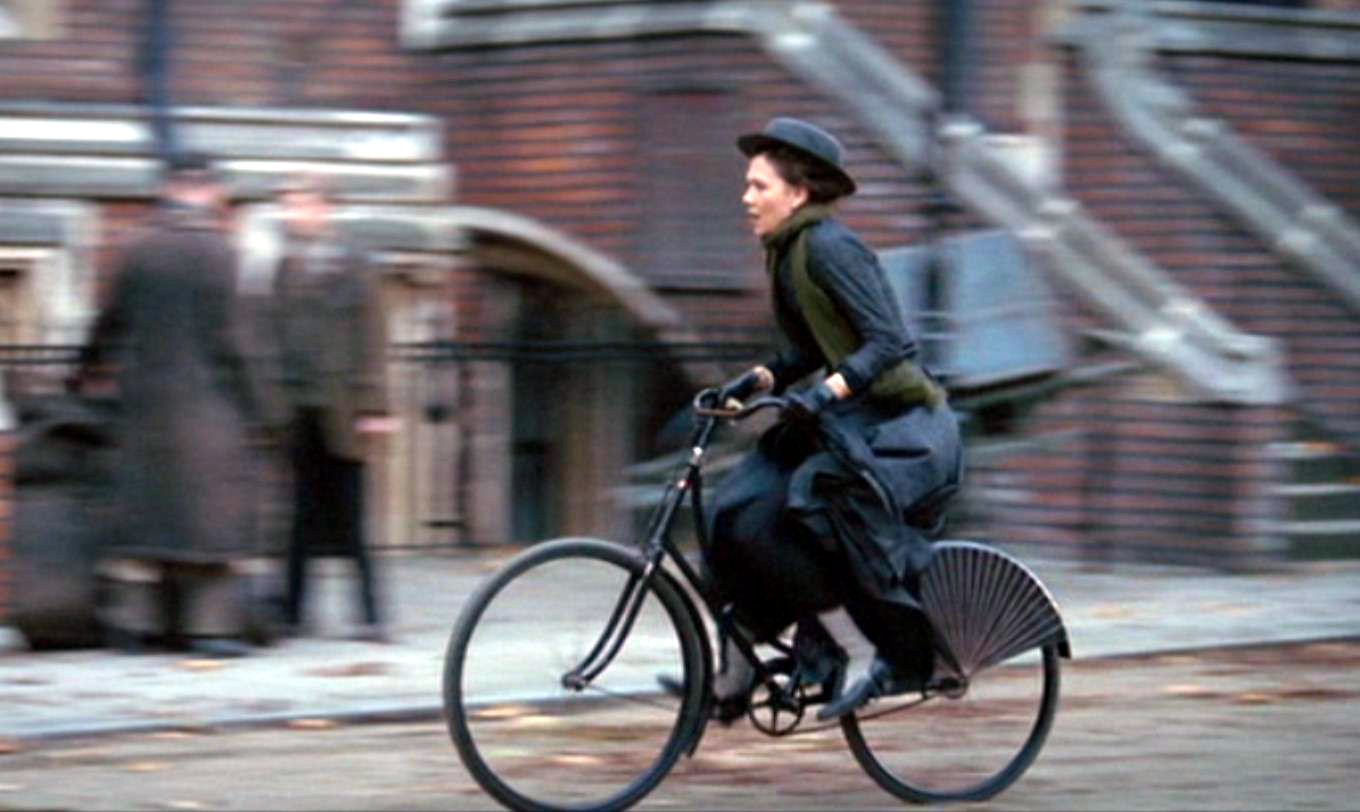
of the screen. I’m enjoying the movie until Maggie Gyllenhaal’s character,
Charlotte, rides down the street on her bike. “Wait, a second”, that voice way
back in my head says. “That’s a safety bike, they weren't invented until
1885.” I know, the director was trying to show that the character of was a
strong, independent woman. The bicycle in the 1890s was a very instrumental in
the woman’s rights movement. In fact, Susan B. Anthony told the New York World’s Nellie
Bly in 1896 that bicycling had “done more to emancipate women than anything
else in the world.” But, the safety bike, though it is very cool, wasn’t invented until 1885.
The manuscript I just finished contains about 200 "things" about Chicago. Since it is for kids, I thoroughly researched every fact and yelled at my computer when I found twisted information. For example, several sources said that rainbow sherbet is a Chicago thing. The truth is "rainbow cone" is a Chicago thing, not rainbow sherbet.
In my description of the 1893 Chicago Columbian Exposition, I wanted to show the many inventions from the fair. Many sources said that the 1893 Chicago World’s Fair introduced the world to the Pledge of Allegiance, Cracker Jack, the Ferris Wheel and Juicy Fruit Gum. The Random House site for The Devil in the White City says: "The World’s Fair introduced America to such classic favorites as Cracker Jack, Shredded Wheat. and Juicy Fruit and was the birth of historically significant symbols like Columbus Day, the Ferris Wheel, and the Pledge of Allegiance." In actually, what Erik Larson wrote about Juicy Fruit was: “They sampled a new, oddly flavored gum called Juicy Fruit and caramel-coated popcorn called Cracker Jack.” Evidently, what Erik Larson writes is fact. Many sources now state, crediting The Devil in the White City as the source, that the 1893 Chicago World’s Fair introduced the world to Cracker Jack, the Ferris Wheel, and Juicy Fruit. Cracker Jack was actually sold at the fair, the Ferris Wheel no one can doubt was a hit at the fair, but Juicy Fruit was not officially at the fair.
Other products that receive second billing as introductions at the fair had actual booths; Aunt Jemima Pancake Mix, Shredded Wheat, Pabst Blue Ribbon, and others. The Wrigley website reads: "In 1893, during an economic depression, he introduced two brands that would become company icons: Wrigley’s Spearmint® and Juicy Fruit®."
Going straight to the source, I sent an email to the Senior Vice President of Wrigley Corporate Affairs. We went back and forth a few times but I didn’t get an official answer to my question:
"In time for the fair and the millions visited. It would have been sold by salesmen and women to the crowds attending may of whom visited Chicago for the first time. There will not have been a Juicy Fruit pavilion I'm pretty sure it was launched in time for the worlds fair rather than at it.” "It was as I thought. It was launched in Chicago in time for the World’s Fair but it wasn’t an official part of the Fair.” “The fair bought many people to chicago so lots of footfall for the brand." "But in 1893 Wrigley was a small business and remain so for another 15 years or so.”
In the end, what I finally wrote as part of the 1893 Chicago Columbian Exposition: William Wrigley Jr. introduced Juicy Fruit gum. (And, people wonder why writing takes so long.)
I started this piece by quoting Sgt. Joe Friday, I thought I’d end it by sharing a few fabulous fact quotes by some very wise folks.
“If the facts don't fit the theory, change the facts.” ~Albert_Einstein
“Facts are stubborn things, but statistics are pliable." ~Mark Twain
“Facts are stubborn things; and whatever may be our wishes, our inclinations, or the dictates of our passion, they cannot alter the state of facts and evidence.” ~John Adams
“The truth is more important than the facts.” ~Frank Lloyd Wright
“False facts are highly injurious to the progress of science, for they often endure long; but false views, if supported by some evidence, do little harm, for everyone takes a salutary pleasure in proving their falseness; and when this is done, one path towards error is closed and the road to truth is often at the same time opened.” ~Charles Darwin
And, finally,
"Never trust quotes you find on the internet." ~Abraham Lincoln

Labels: Anna M. Lewis, women, writing
Thursday, February 21, 2013
The Next Big Thing: Nonfiction Edition
For my INK blog this month, I am doing something a tiny bit different, although all the content is still nonfiction, and it is in honor of my new picture book about Elizabeth Blackwell, the first woman doctor in America, which came out this Tuesday. But I digress. What is the Next Big Thing? It is an author blog tour. What’s a blog tour? A blog tour gives those on the tour a chance to meet different authors by way of their blogs. The Next Big Thing began in Australia. Each week a different author answers specific questions about his or her upcoming book. The answers are posted on author’s blogs. Then we get to tag another author. On and on it goes.
The tour came to me from Manhattan. I was tagged by my friend Elizabeth Winthrop. She was tagged by her friend Eric Kimmel. I’ll tell you whom I’m tagging at the end.
Now for the questions.
What is the title of your next book?
Who Says Women Can’t Be Doctors? It is the story of Elizabeth Blackwell, who was the first woman doctor in America.
Where did the idea come from for the book?
I have done, and do, a lot of research on women’s history—especially in America. Elizabeth Blackwell’s story was one I came upon again and again. It was also one of those stories I tried to sell more than once but met with some resistance because Blackwell’s name is not instantly recognizable. I felt that was exactly why there should be a book about her!
What genre does your book fall under?
Most definitely picture book.
What actors would you choose to play the part of your characters in a movie rendition?
Keira Knightley would make a fabulous Elizabeth Blackwell, who was also British—although she is too tall in real life. But Knightley captures the spark and fire of Elizabeth well. Blackwell was a petite blonde, studious and serious, but a real risk-taker.
Who is publishing your book?
Christy Ottaviano Books/Henry Holt and Company (Macmillan Kids Books)
How long did it take you to write the first draft of the manuscript?
I never know how to answer this question! With picture books, especially, I tend to write a draft and stick it in a drawer for quite a long time, then pull it back out and work on it again, and repeat. A few years inevitably pass in this way.
Who or what inspired you to write this book?
Elizabeth Blackwell inspired me to write this book! There are older books about her, but it was time to get younger kids excited and let them know who this trailblazer was.
What else about the book might pique the reader’s interest?
I love Blackwell’s fire. The details I discovered about her toughness as a kid were a delight to find and kids will, I think, really be able to relate to some of the things she did as a child. Who Says Women Can't Be Doctors? hit bookshelves this past Tuesday, and I couldn't be happier.
For the next Next Big Thing, I am tagging the amazing and talented Deborah Heiligman. Her answers will be up soon.
Labels: picture books, Tanya Lee Stone, women
Tuesday, February 19, 2013
Why Do Books Publish on Tuesdays?
Why do books get published on Tuesdays? I have a book coming out in June, The Boy Who Loved Math, and yes, it's June 25th, a Tuesday. I looked back to when my novel Intentions pubbed--August 14th, a Tuesday. I didn't always know this; in fact I just found it out this past year. I wish I could remember who told me. But the other day I was talking to Ziki, the man who sticks needles in me to make my back and leg pain go away. We made an appointment for the next week (tomorrow) and I told him that afterwards I would be going to a book party for my friend Marguerite's new book:
"But it's not a Tuesday," he said. I told him a book party doesn't have to be on the release date--but wait, how did he know that? He wasn't sure, he just did. He said that albums always had a day to release (he thought Fridays, and maybe it used to be so, but now it seems CDs and DVDs of movies release on Tuesdays, too).
I asked a few people, and no one seemed to know. I posted my question on twitter and got these answers:
Tradition based on coverage in Sunday papers and getting books on shelves is my understanding.
I asked:
Are they reviewed the Sunday before or after.
The answer:
Before. So that booksellers get to spend Monday explaining why people can't buy the books they just heard about.
Hah.
Other people chimed in with links:
http://www.verlakay.com/boards/index.php?topic=64015.msg754277#msg754277
http://www.themillions.com/2009/06/ask-book-question-73-tuesday-new_09.html
http://www.fourhourworkweek.com/blog/2012/08/17/amazon-monthly-100/
And other answers:
I've heard shipment was a factor--UPS boxes come Monday, scan & put out CDs, etc., Tue.
Probably a less busy day for most stores too. But no one seems to know for sure.
I'm 99.9% sure books are Tues b/c of Music release on Tues. So ? would be why music on Tues.
This might answer that question:
http://rulefortytwo.com/secret-rock-knowledge/chapter-4/why-are-cds-released-on-tuesdays/
I read all of those (you don't have to) and it still seems to me that no one knows for sure... I asked some friends who are publishers and editors: nope. They didn't know.
And so I started thinking two things:
1. In the old days, I would have called a reference librarian. My old friend from the Doylestown library (where I used to live) would have found out for me, I know that for sure. So I decided to call the New York Public Library. Oops. I waited too long. It's Presidents' Day. Library closed. But it took me almost a week to remember that I used to talk to reference librarians for this sort of thing. Yes, kids, before the Internet. I used to go to the library, go up to the desk and say, "Jan, how do I find out the answer to this question?" And sometimes Jan would just find out for me, and sometimes she would teach me how to fish. I did this for a long time, even after there was The Internet, until it became more or less part of my right hand.
2.Will this change? Whatever is the cause, will Tuesdays as pub dates change if there are more ebooks and fewer bricks and mortar bookstores? Then will people release books willy nilly? Do people who self-publish books follow the Tuesday rule?
I'm really hoping that someone will post here and tell me... Why do books publish on Tuesday? I've just spent so much time on this... as so often happens when one (me) gets stuck on a research treadmill. I just want to know the answer!
Uh oh. Wait a minute. I just looked up Marguerite's book and it officially published YESTERDAY. Which was Monday. According to Amazon. And B & N. Her publisher just says February. Okay, now I'm really confused.
Labels: 2013 titles, Deborah Heiligman, publishing, research
Monday, February 18, 2013
Presidents Day
So, today's the 497th anniversary of the birth of England's Queen Mary, Elizabeth Tudor's miserable, "bloody" half-sister and golly, what a sad and dreadful, star-crossed bunch there's was. How sane and lucky many another family is by comparison, no? It was on this day in history that physicist Alessandro "Mr. Battery" Volta was born, in 1745, a good 103 years before Louis Comfort Tiffany came into the world. February 18 marks the deathdays, too, of lovely painter Fra Angelico and revolutionary Martin Luther, who exited the world through the celestial door marked 18 Feb, in 1455 and 1546, respectively. Just for you to know. A pair of the best character actors ever to glower down from the silver screen, Edward Arnold and Adolphe Menjou, were both born on the 18th of February, 1890, two years before that glad-hander Wendell Wilkie was born, only to be well and truly thrashed by FDR in the 1940 election..
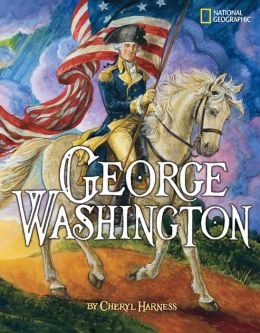
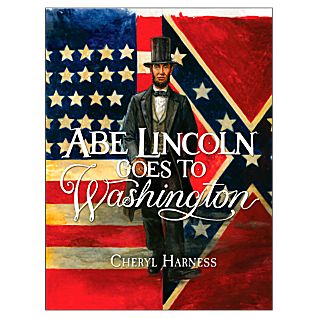
And speaking of Franklin D., it appears to be Presidents' Day, splitting the difference as we do between the commemorations of the great No. 1 and No. 16. In the stores, the tired Valentine candies are discounted. Soon there'll be green shamrocks, pastel eggs and bunnies. Here's a slim window in the culture's cavalcade; today there will be a pause in the beleaguered postal service. There will be silly Abes and Georges in advertisements for furniture, cars, and appliances. Behind and beyond it all were the steadfast pioneer of untrodden ground, of revolution and dare I say it: nation-building. And the grievous, complex stalwart who held it all together for a little while longer. I cannot help but think of all of the other gents who've held the office, each of whom represents a chapter in our ongoing, bumptious experiment in self-governance. And anyway, so the world turns and the calendar continues, And every day of it is a chance to remember those who've gone before. So let there be books, all of our books in which the stories of those vanished lives are shown and told, pictured and explained, again and again for our young readers, for our ever-renewing citizenry. Long live the republic.
Labels: Cheryl Harness, US History
Thursday, February 14, 2013
Tweet
Labels: Barbara Kerley, history
Wednesday, February 13, 2013
On Challenging Words
Tuesday, February 12, 2013
The Man
I was eight years old, it was 11:30 at night, and I was in bed spinning the radio dial trying to find a talk show. Radio talk shows were always lively and fun, extended bits of lighthearted talk with some music tossed in here and there, accompanied by the happy background clink of cocktail glasses. But instead of clever chatter I found a baseball game.
*
This caught my attention. It was late and the local teams (the Yankees, Giants, and Dodgers) had all finished their games. This radio broadcast must be coming from someplace way out west, I thought. Like Pittsburg. Or maybe even Chicago.
*
The first thing I remember the announcer saying was: "...he's digging into the left side of the plate and settles into his familiar corkscrew batting stance...."
*
A corkscrew batting stance? Odd. I knew about strange batting stances, by the way. My friend, Bobby, from across the street, would choke up on the bat, then hunch over and lay the fat end of his bat on the dirt behind him in the batter's box. He wouldn't lift up the bat until the ball was sailing toward him. His way of hitting made me nervous, but, miraculously, he always seemed to make contact.
*
But this corkscrew stance? In professional baseball?
*
As I tried to picture this weird stance in my head, my father poked his head in my room and asked what I was listening to, so I told him about this batter's (I hadn't heard his name announced) weird stance. "That's probably Stan Musial," he said. "He's with the Cardinals and he's a very good baseball player." He was about to head downstairs to read his newspaper, when he turned to say something else. Now, it's important to know that my Dad was a diehard Yankee fan who could rattle off the names and stats of every Yankee great. Every so often he might drop in a nice mention of a Giant (Willie Mays, especially) or of a couple of Dodgers. But for him the Yankees were where baseball royalty ruled supreme. So it got my attention when he added, "Musial is one of the greatest players in baseball history. He's so good a hitter that he's known as 'The Man.' Stan 'The Man' Musial."
*
As my Dad went downstairs there was a distant cheer from my little plastic radio as Stan Musial rapped a pitch into right field for a double that scored a run. A perfectly timed moment in my life.
*
The next morning at breakfast I told my parents about the game and how this guy Stan Musial seemed to have won it single-handedly, with two hits and several great fielding plays. I said I wanted to know more about him.
*
Getting more information wasn't easy way back then. No internet connection to Amazon or Barnes & Noble; no finger tip computer buying of used books or magazines or whatever. But by the end of the day my Mom had managed to find a book about Musial (at the library) and my Dad came home with a magazine that had an article about him. Both with photographs that included his famous corkscrew batting stance. And his smile. He seemed like a thoroughly nice guy from what I read and the photos I studied. I was completely mesmerized by Musial, a non-Yankee and on top of that a National league player for the St. Louis Cardinals.
*
St. Louis? I looked up where St. Louis was. Then I read about the Cardinals, their history and who else was on the team with Musial. I even bagan to appreciate cardinals (the birds) and found some glorious colored pictures of them. In the weeks to follow my parents found other books and articles about Musial, all of which I gobbled up. Then I started reading about other great players of the time (Ted Williams and Willie Mays, for example) and even read the official major league baseball rule book. Don't ask me why because I don't remember wanting to read it, just that when it appeared on the kitchen table I grabbed it and read it cover to cover. I was probably the only eight-year-old who could get into a screaming argument over a disputed sandlot baseball play and cite and explain rules between cusses, comments on the other kids vision problems, and other insults.
*
Stan Musial's recent death had me thinking about this unusual (for me at the time) quest for information that clearly boardered on the obsessive. From Musial, to his baseball team and teammates, to a city and then on to other players and hundreds and hundreds of arcane rules. And birds! It was like a weed growing and expanding and taking up more and more terrain (in my mind, at least).
*
This began as a desire to know more about one of baseball's greatest ever players. But then I found myself hooked by the gathering of details and the way it shaped and informed my understanding of Musial and baseball. The more I learned the better I felt I knew Stan Musial.
*
The funny thing is that I now do research for my projects in much the same way. I begin with a topic that interests me and then start reading about it. I constantly ask myself if any readers -- kids who probably don't know much about whatever the subject is -- will be interested enough to pick up and read the book. The research monster grows and grows, taking up months and years of time, and often wandering off into lands that don't have much to do with the focus of the project. If I get bored with the project, I assume my readers will, too, and I give it up (something that, sigh, has happened all too frequently). But in most cases I press on with the research until I can 'see' the time and people and situations in my mind and, hopefully, will be able to transcribe these images onto the page so that readers can experience history as if they were actually there. And maybe be curious enough to carry on their own search for more information.
*
Stan Musial was 'The Man' who led me down this research path. When I heard that he had died I took a baseball from a dusty office shelf and put it on my desk. It was signed by Stan Musial in a steady, sure hand with "H of F 69" proudly written underneath It's the only autographed ball I have. I never met Stan Musial in person, but for some reason I feel as if I knew him very well.
Monday, February 11, 2013
Common Ground, Common Core
In 2004, my book Skyscraper was published. In 2010, it went out of print. I wrote a post about it, Skyscraper RIP, a eulogy for a book that was well received, but really because I loved the experience of researching and writing it.
Lazarus, you aren't the only one. I'm happy to say that Skyscraper is alive once more, in some classrooms at least. The story of its resurrection, however, is also the story of how some publishers and school systems will be handling Common Core.
Scholastic has published a series called Math Reads. Marilyn Burns, whose resume in teaching and designing math curricula seems impressive, headed a team of other teachers to create it. Here is a description of their product:
- 25 children’s literature titles (5 copies of each)
- Lessons written by Marilyn Burns and Math Solutions authors
- eBooks of select titles for interactive whiteboards
- Math Solutions’ Math and Literature professional development book
If you look at the curriculum for Math Reads' 5th grade, you'll see Skyscraper has been included and is in some very good company, including Hottest, Coldest, Highest, Deepest by my I.N.K. colleague Steve Jenkins, Pennies for Elephants by a friend Lita Judge, Wilma Unlimited by the always good Kathleen Krull, and Mordicai Gerstein's The Man Who Walked Between the Towers, an extraordinary book I've blogged about before.
So this Math Reads series contains good fiction and nonfiction books (although only 5 copies of each per classroom), additional titles in eBook format, and lesson plans to use all these books to satisfy Common Core. Hopefully, teachers and students will be exposed to good literature they might not have ever seen. Hopefully it will spur a greater interest in reading as well as a better understanding of math. It will help overworked teachers adapt to the demands of Common Core quickly and, again hopefully, once they get their bearings, they will feel confident to use their own ideas and own favorite books to enrich their teaching. These are possible positive outcomes of this series--along with good profits for Scholastic.
It also seems to be a model we will see more and more as publishing and education fulfill both the needs and opportunities that Common Core has created in terms of nonfiction in the classroom. I'm not advocating for this model, I mentioned it to start a discussion of what other models and reactions we'll see. What we think about them. What we realistically hope to see. What we think are practical and will work.
What do you all think? I'm particularly interested in what all the teachers, librarians and other educators who read our blog have to say about the matter.
Wednesday, February 6, 2013
Taking Note of Note-Taking

Labels: CCSS, Common Core State Standards, Vicki Cobb, writing
Tuesday, February 5, 2013
MAKING HISTORY BOOKS THAT SHINE
I write a lot of books about history because history’s cup runneth over with the best stories of all time. So with an ocean of great tales to choose from, picking something fabulous and delicious and unusual should be as easy as pie, right? Well, guess what. It ain’t. Why not? Some Restrictions Apply.
Restriction # 1:
Restriction # 2:
Labels: history, nonfiction writing, picture books, Rosalyn Schanzer