Recently Sandra Jordan I finished a non-fiction book The Mad Potter: George E. Ohr Eccentric Genius to be published in September, 2013. It is the story of an American maverick, an artist/ceramicist, whose body of work was hidden away in crates on his sons’ property in Biloxi, Mississippi, until he was rediscovered fifty years after his death in 1918. When we attended the ALA conference several years ago in New Orleans, we decided to visit the rebuilt Ohr-O’Keefe Museum in Biloxi. The buildings had been leveled by Katrina. It was designed by Frank Gehry, an architect, whose life and work we featured in our book Frank O. Gehry Outside In. We were somewhat familiar with George Ohr, now considered one of America’s greatest potters, but the hardhat tour in Biloxi convinced us that Ohr would be the subject of our next book. A flamboyant character, whose quirky, abstract pots didn’t fit in with conventional tastes, George always believed his work was “Unequaled, unrivaled and undisputed.” Sandra and I had a wonderful time researching and putting this book together, as we loved his art pottery and his wild personality. I will talk more about George as we get closer to pub date.
One of the biggest challenges we faced putting this book together was not only digging up vintage photographs of George and the South at the turn of the century, but also making sure that our young readers could place him in the context of his times. That, along with interviews and extensive research required numerous chapter notes, which is what I’d like to talk about today - the (sometimes dreaded) backmatter that all good non-fiction books must include: a bibliography, chapter notes, permissions for artworks and photographs, even a glossary or an index, and more, depending on the subject, the age group and the author’s decision about pertinent information that doesn’t work in the text. For example in Ballet for Martha: Making Appalachian Spring (with Sandra Jordan and illustrations by Brian Floca), we wrote short bios of Martha Graham, Isamu Noguchi and Aaron Copland for the back matter, as the collaboration on the dance was the subject of the book, which is non-fiction but not a biography.
Here are the questions we ask when we’re writing chapter notes:
1. If it is a quote, where did we get it? The source with page numbers. Document this immediately, so you’re not frantically trying to find it later. (Yes we have been guilty of the last minute scramble.)
2. If there are several sides to the story and telling them all in the text is unnecessary, which one do we use? e.g. Andy Warhol and Vincent Van Gogh: There were multiple versions of many episodes in their lives. We chose the versions from by best sources and/or seemed most believable to us. Put the other(s) in the chapter notes.
3. What is the form? We’ve discovered working with a number of different publishers that the forms for the footnotes and permissions vary from place to place, copy editor to copy editor. So we use the form from the last book we did with that publisher and let the copy editor do his/her job. Beware when the publisher farms it out to a temp, if the official copy editor is on sick leave or a vacation. When he/she returns to the office, the form can change drastically and much retyping by the author ensues.
4. What about a information that enhances the story but would be too much of an intrusion into the text? The back matter is a great place to add fuller historical/ anecdotal material that complicates the text or makes it longer than we wanted it to be. We try to balance, to add the extra information we want to share with readers, while not weighing down the backmatter and limitations of space. We love those extra glimpses and hope our readers, both children and adults, will too. Here is an example from The Mad Potter.
In the text we write about the Civil War and how it affected Biloxi, when George Ohr was a child. We did not take for granted that the young reader knows much about the Civil War. We added some historical facts in the chapter notes.
5. Finally do we list the sources of every scrap of information in the book? We use our own judgment on this but try very hard to give credit to primary and secondary sources, either from interviews or in a book or article. Facts, such as dates, names, places, and quoted material, are footnoted. And we always double check factual material.
“

Thursday, January 31, 2013


Wednesday, January 30, 2013
Embracing--and Seeking--Structure
A
confession: As a writer, I love it when the structure of a project is
predetermined. I'm happiest when given a format, word counts, what Deb
Heiligman called "restrictions" in her terrific INK column last week.
Perhaps it has to do with cutting my teeth as a nonfiction writer at Time-Life
Books, back in the pre-Google days. Each volume of those fabulous series, on
subjects ranging from The Civil War to The Seafarers to Mysteries of the Unknown,
was thoroughly mapped out by a team of editors, researchers, photo editors, and
art directors before the other staff writers and I received our assignments for
it. The layout was pretty much set in concrete, and our job was to write copy
to fit. Heck, we didn’t even do our own research. There was a separate research
staff for that. They gave us thick packets of photocopied material, with relevant
sections already highlighted. If I needed more information for a photo essay or
a picture caption, I asked the researcher assigned to the piece to see what
else he/she could find. It was actually a pretty efficient system, and the
discipline and deadlines it imposed were great training. I still take pride in
the excellent quality of the books this team approach created. But I have to
say I was jealous of the researchers, who got to hang out in the Library of
Congress and other cool places while we writers stayed put at the office. I felt
like I was missing something, the thrill of the hunt perhaps.
After
I left Time-Life to freelance, I was hired to write several books—including one
called Wildflowers—for a children’s nonfiction series called My First Pocket
Guide. Now it was up to me to do the research, and I took to it like a fish to
water. The books had a fairly rigid format. Each book was to be 80 pages long
and feature about 35 specimens. There was one specimen per spread, and each
spread had to include a 2- to 3-sentence introductory text block, a “Where to
Find” map box, a “What to Look For” box listing size, color, behavior, and
“more,” and a Field Note containing a fun fact about the specimen. Each spread
also had to include a line drawing of the specimen, a full-color photograph of
it, and an illustration linked to the fun fact. Although I had to stick to the
format, it was up to me to decide which animals or bugs or wildflowers to
include in the book and how to organize them. I had to create structure within
the existing framework. (It occurs to me, by the way, that creating a similar
book could be a fun classroom writing activity. Each student could research one
specimen and then create a page for it using this format. The students could present
their finished pages to their classmates, and all the pages could be bound into
a book.)
My
newest book, Master George’s People,
took me a long time to write, in part because I struggled with structure for so
long. Other than a word count, I had no restrictions to help me out, no
comforting format to follow. I only knew that I wanted to tell two stories in
the book—the story of what life was like for George Washington’s slaves and the
story of how Washington’s attitude toward slavery changed over his lifetime. I
had to fight against letting Washington’s story overshadow the other. I finally
found my way in by returning to (this won’t surprise many of you) the primary
source material. Once I identified a pivotal scene for an opener—that of slave
children playing in Washington’s boxwood garden—the rest of the structure
seemed to spin out more or less logically, although I can't say the process went smoothly.
Although
I’m pleased with the final result, I can’t help feeling that I approached the
issue of structure backwards in this case, making things harder for myself than they had
to be. Next book, maybe even while I'm still researching it, I’m going to try tackling structure first. Maybe I'll sketch a diagram or "a looping doodle with guiding arrows and stick figures," a strategy discussed by John McPhee in his recent New Yorker article about structure. The idea, he writes, is to "build some form of blueprint before working it out in sentences and paragraphs." A blueprint, that's kind of like a format. And did I mention that I'm very comfortable with formats?
Tuesday, January 29, 2013
A Bird’s Eye View of Teaching Persuasive Essay Writing
This summer, part of my job was helping some 4th
and 5th graders hone their skills at writing persuasive essays. This
essay form is often seen on standardized tests and is the style kids tend to hate
the most. The format must be strictly followed and the rules can be
intimidating. There must be five full paragraphs: Introduction, Reason 1,
Reason 2, Reason 3, and Conclusion. Yes, each essay must state three reasons
and you have to write a full paragraph elaborating on each reason.
Boy, kids really hate this. Can’t you hear the whining now
about how they can only think of two reasons? Even though the essays are
usually about “kid friendly” topics, they’re not the kind of subjects kinds
enjoy pondering, especially when faced with the pressure of writing five
paragraphs in 30 or 40 minutes. Honestly their feelings about whether there
should be vending machines in school or all students should wear uniforms is
usually rather limited and their fear about if they will have enough to write
seemingly never ending.
So instead of rote practicing, I used non fiction books to
get them thinking. After we talked
about the life experiences of a certain bird in New York City, my students had
a much better understanding of perspective and point of view. And once we put
those things together, their essays really started to flow.
I chose I.N.K. books about a bird named Pale Male, a hawk
who chose to build a nest on a swank 5th Avenue Apartment building
near Central Park in NYC. This was fascinating to city bird watchers because
Hawks were rare in the area but it became a full blown news story when the
ritzy apartment building removed the hawk’s nest because of the resulting mess
in front of the building and the constant peeking eyes of the bird watchers
with large telescopes in Central Park.
There are at least three good non fiction children’s books
that I know of about Pale Male. The story and illustrations are a great way to
introduce the concept of perspective. The hawks fly high above Central Park and
the buildings, giving them a perspective to search for their prey, see the
natural beauty of the city, and keep away from the crowds. In the trees or
lower on the ground, they can be vulnerable to large groups of crows or people
touching their nests. These books also open up a conversation about
perspective’s cousin, point of view: what did the hawks want and need, how did
the bird watchers want to help them, and how was this the same or different
from how the people living in the apartment building thought about birds
nesting there?
I ‘ve also found it effective to read two of these books and
compare and contrast. What points of the story did each writer focus on? What
were some details that were included by one writer but left out by the other?
Are there any facts that were absolutely necessary in order to tell the story?
These discussions translated easily and naturally to the
persuasive essay form. The kids began to understand that students will often
see an issue differently than a teacher or parent or the Principal based on
their point of view. They could expand their reasoning when seen from another
point of view and based on whom they were trying to convince. Is the letter to
a friend or relative? Lets talk about how you could have fun and do things
together. If the letter is to the Principal, you can focus on reasons such as
safety, health, learning, and community.
From my perspective,
using non fiction is tremendously effective in helping kids expand their own
way of seeing things and how others see things. This enables them to feel much
more confident about their reasoning and, ultimately, helps them express that
more naturally in their writing.
Monday, January 28, 2013
A School Where Science (and Non-Fiction) Rule

It’s hard to imagine a teacher prouder than Maria Martinez,
or second graders happier with what they're learning and how they're learning it in her classroom. The best part is that I
can say the same thing about the other teachers and students I met at
Sci-Tech Academy at Knights Landing, in California's Sacramento Valley. They are the Sci-Tech “Robots” at
this public charter school where the mascot is not a ferocious animal and the motto is
“Hands On—Minds On.”
In 2009, the Woodland Joint Unified School District closed Kings Landing's only school, Grafton Elementary. The rural community's population was under
1,000 and the district knew it could save $s by shutting the school door and sending students eleven miles to Woodland. It’s a scenario that has befallen rural communities and urban neighborhoods across the country, and usually the teachers and
residents sigh and bear it. But a cadre of dedicated teachers in the Woodland district,
including Ms. Martinez, came up with another plan. They would form a K-6 charter
school focusing on science and technology, and they would petition the district
to let them use the Grafton building. After just one
year in mothballs, Grafton Elementary was reopened as Science and Technology Academy at
Knights Landing. Local parents started enrolling their children as did others from
communities nearby, and still others from outside the district — even some from Davis, 20 back-road
miles away, an acutely eco- and education-minded small city boasting
blue-ribbon schools and a University of California campus with renowned science
programs.
My tip-off to something special
going on at Sci-Tech came during my first presentation to primary grade
students. I showed my book on animal camouflage, Where In the Wild? Camouflaged
Creatures Concealed… and Revealed. The word “camouflage” is often understood
by primary grade students but I’d never before met second graders who used the word
“adaptation” when describing it.

“We just finished a unit on animal
adaptations,” explained Ms. Martinez when we chatted later. The M.O. at
Sci-Tech is that science units define the entire curriculum. A unit on
adaptations means that students read a range of non-fiction books about ways
animals have evolved to meet the demands of their environment. “We do our reading to fit our science units, and everything
else comes out of that,” she explained. They explore the vocabulary they find
in their reading. Writing, discussions, further explorations ensue. Math gains
relevance by being tied to the science units.
Modern digital technology is important
in supporting the inquiry-based classroom at Sci-Tech, but not at the expense
of low-tech. Not only do print non-fiction books abound, but so do animals in
captivity — live ones, not virtual
pets on a smartphone. Every classroom has them. “The students learn what it
means, and what’s required, to take care of animals,” says sixth grade teacher Glen
Lusebrink, “and we also use the animals to get to other areas of the
curriculum.” His room has fish tanks populated by a variety of cichlid species.
“This one is from Africa,” he tells me, “and these are from South America.” So
we get out the maps, the globes, the books and we learn about Africa, we learn
about South America.
Because
of my presentation schedule, I did not get to see any classrooms in action, but
I learned about some of the action over lunch in the staff lounge. In all of the conversations, teachers were buzzed about their students' latest hands-on discoveries.
First graders had been sifting rocks into size gradations (there’s a math
lesson there along with the science) and Kindergarteners had just finished
distinguishing between water and identical-looking salt and sugar solutions by
testing various properties of the liquids, including taste. “Oh, I wish I’d
videotaped them,” said their teacher. “When they were tasting that salt
solution—you would have loved the looks on their faces.” And the impressions on
their minds.
Clearly,
the hands-on approach touted by the school’s motto is more than a marketing
phrase. And it is even more than an impassioned approach to science and the
rest of learning. For some students, it’s a matter of do or (academically) die.
“Our school makes learning possible for children who do not thrive in an environment
of seatwork and workbooks,” says Principal Barbara Herms who holds the view
that when hands and bodies are active, so are minds. “And our success is
showing.” I asked if she was referring to test scores. “Yes, that among other
things.” I’m heartened to know that test scores are up but I’m even happier to
know that here tests aren’t the only measure of student success.
Parents
are often the most vociferous critics of schools, so I looked up Sci-Tech Academy on www.greatschools.org and found five (out of five)
five-star reviews by parents. One will suffice: “All the teachers, staff,
parents and children are excited about learning! This school’s atmosphere is
all about helping each child reach their full potential. My children do not
even like missing one day of school.”
Need
I say more? Probably not, but I will anyway. A curriculum connected to close
readings of non-fiction texts sounds like it has the Common Core State
Standards written all over it. But Sci-Tech has been doing it since before
those four words were ever strung together.

Friday, January 25, 2013
New STEAM Books for Kids
Earlier this week, I was doing a little personal research on
STEAM books for kids. I hopped over to Google and entered STEAM books for kids.
After looking through the 120+ hits on Mike Mulligan and His Steam Shovel (and a few
Steampunk hits), I finally found a reference to a book discussion about STEAM
books, and then more pages on Mike Mulligan and His Steam Shovel. When I used quotes,
I got one hit… and it wasn’t related to STEAM books.
In November of 2011, in an INK post titled STEM & STEAM – Interesting Nonfiction for Kids, I wrote about the importance of STEM and STEAM in the schools.
I love STEAM books. One of the reasons why I was asked to be a member of this group five years ago was of my outspokenness on art books for kids. So, in regards to my Google search above and going back to my INK roots, I wanted to provide a service to any school, library, teacher, or parent who was interested in STEAM books.
Here are just a few of the latest books that may fall into a Google search for:
STEAM books for Kids
Art books for Kids
Adding art books to library
Awesome art books for kids
It Jes' Happened: When Bill Traylor Started to Draw
In November of 2011, in an INK post titled STEM & STEAM – Interesting Nonfiction for Kids, I wrote about the importance of STEM and STEAM in the schools.
I love STEAM books. One of the reasons why I was asked to be a member of this group five years ago was of my outspokenness on art books for kids. So, in regards to my Google search above and going back to my INK roots, I wanted to provide a service to any school, library, teacher, or parent who was interested in STEAM books.
Here are just a few of the latest books that may fall into a Google search for:
STEAM books for Kids
Art books for Kids
Adding art books to library
Awesome art books for kids
It Jes' Happened: When Bill Traylor Started to Draw
by Don Tate, R. Gregory
Christie
Lee & Low Books, April 2012
What Is
Contemporary Art? A Guide for Kids
by
Jacky Klein and Suzy Klein
The Museum of Modern Art, New York October 2012
Sky High
by Germano Zullo illustrated by
Albertine
Chronicle Books, September 2012
Colorful
Dreamer: The Story of Artist Henri Matisse Marjorie
by Blain Parker (Author), Holly Berry (Illustrator)
by Blain Parker (Author), Holly Berry (Illustrator)
Dial, November 2012
Brushes with Greatness: History
Paintings
Brushes with Greatness: Landscapes
By Valerie Boddon
Brushes with Greatness: Portraits
Brushes with Greatness: Still Lifes
By Joy Frisch-Schmoll
Creative Paperbacks, January 2013
A Splash of Red: The Life and Art
of Horace Pippin
by Jen Bryant
Alfred A. Knopf, January 2013
Mister Orange
by Truus Matti
Enchanted Lion Books, January 2013
Diego
Rivera: An Artist for the People
by Susan
Goldman Rubin
Abrams Books for Young Readers, February 2013
And, here's a book to be published soon that my be of interest to teachers, educators, and libraries:
From STEM to STEAM: Using Brain-Compatible Strategies to Integrate the Arts
by David A. Sousa and Thomas J. Pilecki
Corwin, March 2013
In high school when I read The Agony and the Ecstasy by Irving Stone, Michelangelo's artistic passion moved me like no other and drew me to the arts. It is my wish that every child have the opportunity to find his or her passion in life - hopefully, through a wonderful book.
Please, if there are some new STEAM books that I have missed, add them to the comments section.
And, here's a book to be published soon that my be of interest to teachers, educators, and libraries:
From STEM to STEAM: Using Brain-Compatible Strategies to Integrate the Arts
by David A. Sousa and Thomas J. Pilecki
Corwin, March 2013
In high school when I read The Agony and the Ecstasy by Irving Stone, Michelangelo's artistic passion moved me like no other and drew me to the arts. It is my wish that every child have the opportunity to find his or her passion in life - hopefully, through a wonderful book.
Please, if there are some new STEAM books that I have missed, add them to the comments section.
Thursday, January 24, 2013
Tell the Biggest Truth
 |
| HarperCollins/Greenwillow 2010 |
Heartbreak. As
adults, we’ve all suffered through the ache of a love suddenly, irrevocably
absent. We remember the tears that would
not, could not quickly subside – the emptiness a friend, pet or sweetheart once
so tenderly filled. For many people,
especially those past 25, it’s universal.
Not so for the kids who read us. And that’s so important to remember.
It sounds like I’m about to praise YA romance, not
nonfiction, but bear with me.
I’m late with my contribution because my youngest daughter,
22, just had her heart shattered, and I’ve spent my writing hours trying in
vain to comfort her. My arms have been
away from the keyboard, wrapped around her shoulders. My fingers have combed through her tear
soaked hair, ignoring the beckoning keys
of my laptop. My heart has been broken, too.
As I have tried to say something worthwhile, beyond, "I love you," the only thing I’ve come up
with is, “You’ll be a better writer for it.”
She already writes circles around me, on her sunnier days.
It’s lame advice, I know…especially in the height of this reign of destruction. But it is also true. And it is vastly important for all writers to remember.
We may be intimately acquainted with pain, but the kids who
pour through our pages might not be. So
when we tell our true stories, it’s important to be thoughtfully honest. The loss we represent, and the survival that
goes along with it may be a child’s first point of reference, when real pain finally strikes.
When I wrote SAVING THE BAGHDAD ZOO for
HarperCollins/Greenwillow a few years ago, I had to consider that kind of
writing. As I reviewed 7,000 photographs
my subject and later writing partner William Sumner had taken while he was
deployed in Iraq, I came across autopsy pictures of a dead Bengal tiger.
I cried as I looked at each bloody image, grieving the loss
of such a magnificent creature. It was even
more crushing to know it was an American soldier that fired the fatal shots. And I
wondered…how much should I share?
Clearly, the photos of bullets in blood soaked hands weren’t
appropriate for a photo essay for kids 9 and up. Including those images was never a
consideration. But I struggled with
writing about the tiger at all. Then I remembered how I learned compassion and tenderness,
long before I grew up.
I learned through
my mother and father, of course. But I
also learned by reading books. The ache of
Charlotte’s death, as Wilbur wept; the depths of despair in Black Beauty –
these stories taught me how it feels to experience loss. And they gave me comfort when my first
brushes with real life pain finally arrived. Books – fiction and nonfiction -- remind us, we are not alone
in our sorrows. And they give us hope
that we, too, will survive.
Writing about the death of a tiger who had survived
starvation only to be gunned down a year later was painful. Writing about the two tigers the U.S. Army later
gave the Baghdad Zoo in a gesture of apology and friendship, helped ease the
sting. Knowing new tiger cubs soon populated
the war torn zoo gave me a sense of hope.
Will those honest depictions sow the seeds of comfort in
generations to come? I believe they
might. I hope they will and I think it
is important to try.
My daughter grew up reading great stories, true and
fictional. She witnessed the joys and
sorrows of others in thoughtfully written text, and now she’s joined their
ranks. I hope, when she felt my arms around
her, she felt their arms, too.
I hope as we write, we offer our readers the most universal
truth of all – none of us is ever truly alone in our pain. All of us have the hope of better things to
come. I hope we tell the biggest truth, as gently as we can.
Kelly
Wednesday, January 23, 2013
Alexandra Wallner's Perspective
Following
Deborah Heiligman's terrific post yesterday on spatial perspective in art and
structural perspective in writing, I'm offering another sort. Alexandra Wallner, writer and illustrator of dozens of children's books presents an
historical perspective on writing, illustrating, collaborating, and publishing over
the last four decades.
You’ve had a long distinguished career as a writer,
illustrator, and collaborator with your husband, John Wallner. How did your creative partnership come
about?
John and I were freelancing
in illustration in the early 1970’s. In the 1980s, John was offered an illustration job for a series of
books by David A. Adler, the children’s book biographer. John was eager to do
the series but the deadlines were very tight. I reasoned to John that if I
helped illustrate the books, we could do it in half the time if I got equal
recognition for my work. The editor agreed. That’s how it began and it has
worked for many projects since, although we still do projects independent of each
other.

How does this partnership work? Do you work together on all parts of
the process or do you have different roles?
I generally do all the
research for the biographies. At first, we relied mostly on picture files at
libraries and on books. In recent years, it has been easier to research on the
internet. Then John sketches out all the spreads in a dummy. When the sketches
are approved, I transfer John’s sketches onto Arches watercolor paper.
Sometimes I paint all the backgrounds and he paints the figures and sometimes
the other way around. We become a “third person.” The main goal is to have a
consistent looking book at the end.

I reviewed your biography of J.R.R. Tolkien on this
blog back in December 2011, written by you, illustrated by John. How did that
collaboration work?
Since the life of Tolkien
was rather dull in the physical sense and all the magic of his world came out
of his imagination, John came up with the brilliant idea that he would
incorporate a game board of imagination throughout the book to reflect what
Tolkien thought and wrote. I think that is what really snapped the book up.
Otherwise, we would have had scene upon scene of Tolkien in his study with
paper and pen. I think John captured the spirit of Tolkien’s world really well.
I am very pleased with the result.
Any dramatic disagreements working so closely with your husband?
When John and I work
together, we are completely professional about it and always, always keep in
mind the most important thing: the end product. I honestly can’t remember any
major fights about the work. Of course, we have our disagreements! We’ve been
married for 41 years and have shared studio space in all that time. Our biggest
disagreements have been about travel. John does not like to travel at all but
occasionally has made concessions to me. John loves to spend time in his studio
among colored pencils, paints, brushes, and collage material.

You illustrated my latest book Write on, Mercy! The Secret Life of Mercy Otis Warren. What
attracted you to the project – and to other subjects you choose to illustrate?
I really enjoyed working on
MERCY! First, it brought to every one’s attention an historic strong woman I
was unfamiliar with. Mercy is a positive reinforcement for female roles in
history, especially for children. I have written and illustrated books about
female historic figures such as authors: Beatrix Potter, Louisa May Alcott, L.
M. Montgomery, Laura Ingalls Wilder; a famous artist: Grandma Moses; political
figures: Susan B. Anthony, Abigail Adams, Betsy Ross. I have also written and/or
illustrated books about famous men, but the women are closer to my heart.
The Colonial American period is my favorite time period to illustrate. My kitchen
has many pieces of crockery and some furniture from that time. I like
the simplicity and classic lines of everyday objects from that time and really enjoy depicting them. I research my material carefully to make sure I
have as much information about how things looked from any particular time
period. It’s important to depict an accurate account of time periods,
especially in children’s books.

Why the interest in American history?
My favorite subjects in
school were history and literature. After World War II I emigrated from Germany,
where I was born, with my parents who were Ukrainian and Bohemian, displaced by
the war. I have always been fascinated by the United States and its history.
After living mostly in
the northeastern U.S., you’ve migrated to Mexico. What drew you there? Do you enjoy a relaxed tropical lifestyle?
I live in Merida, Yucatan.
Although it is EXTREMELY hot and humid in Merida in the summer, five months out
of the year the climate is very comfortable. I love to swim and do so almost
every day. John does not have to shovel snow anymore, which makes him happy.
Our dining table is on the terraza and we eat in warm tropical breezes all the
time.
Both of us are in our
studios most of the day. John and I both go to a hotel health club where John works out in the gym and I swim. Then we come home for
lunch, take a brief siesta, and go to our studios again for the rest of the
afternoon. I meet with a writing friend for a “writer’s group” every couple of
weeks. I stay in touch with close friends via Skype and email. It’s a pretty
quiet lifestyle, although we are always busy on some project or other.
Has Mexico influenced your artwork?
Yes. I love my garden and I
love cactuses. I have incorporated my garden into work, especially for Ladybug magazine. Also, Mexican color
stimulates me and has influenced some bright new paintings.
You’ve been in the business since the 1970s. How would you describe the high and
lows of the children’s publishing industry since then? What is your opinion of
the state of the industry today?
Wow! That’s a loaded topic!
Lots of change! When John and I started illustrating, we had to work with
pre-separation. That meant painting four separate paintings in black and white
for each of the four colors that the printer laid over each other - black, red,
blue and yellow – to make a colored picture to print. Tons of work! I’m glad I was young with better eyes.
The industry used to be
more personal, with more contact with art directors and editors. The art
director invited us to see our books in the process of printing and we had control over the color. By the time John and I
started working on the Adler biographies, four color printing was being used
and all we had to do was one painting. Thank goodness!
Then the publishing companies started to merge with media companies and everything was less personal. The biggest change came when publishers were taxed on the books in storage. Before, a book was kept in print for several years and had a chance to catch on with the public, but after that, if a book sold poorly, it was scratched from the list after a year or two after publication. It seems like children’s books changed from personal to big business in the last couple of decades.
Then the publishing companies started to merge with media companies and everything was less personal. The biggest change came when publishers were taxed on the books in storage. Before, a book was kept in print for several years and had a chance to catch on with the public, but after that, if a book sold poorly, it was scratched from the list after a year or two after publication. It seems like children’s books changed from personal to big business in the last couple of decades.
I’m glad John and I had the
chance to start and continue in the industry when we did. Holiday House, with
whom we published many books, is still a personal place where we have a
relationship with John Briggs, the publisher, and the staff. We are very
grateful to them. We feel fortunate to have been a part of this industry for so
long.
What are your present and future projects?
Right now I am writing a
novel for adults. I am on my second or third draft. I’ve lost count, but hope
to tie loose ends together this year and submit it for publication. After that,
more painting, I think.

Tuesday, January 22, 2013
Perspective
"During a significant part of his career Van Gogh worked using a perspective frame, a centuries-old artistic aid. The frame could be secured to one or two supports at eye level. Van Gogh would view his subject through the frame and on his blank sheet of drawing paper or canvas would sketch the lines that corresponded to the wires and edges of the wooden frame. In this way he was able to make an accurate assessment of the depth of field and the proportions of his chosen subject and to render these correctly onto a flat surface."
.jpeg)
So two things about the perspective frame intrigue me. One is that it is a tool to learn while you are doing. What do we who are writers have that does that? More than the writing itself, I mean. (My friend Laurie says each book teaches you how to write that book.) And the second is that it is a tool that frames a scene for you, or helps you frame it, I should say, depending on where you place it. Go, stand up, and look out the closest window. That's a frame into your outside world, isn't it? If you wanted to paint that scene, the window frame (or a single pane if you have a multi-paned window) would help you put things into perspective (even without the wires) and also frame it for you in a way that would help you see it more clearly and, I think, even more beautifully.
Recently on a panel someone asked me why I decide to write something as nonfiction or fiction, as picture book or long-form narrative book. I answered that usually the project told me itself (Ok, that sounds weird, but you know what I mean) what shape it wanted to be. But that's only half the story. Once I decide on a frame, that helps me write the book. So the first frame is format and length--fiction, nonfiction, picture book, YA book, middle grade, narrative, photobiography, etc. I put my own perspective frame around it, such as in my new book, The Boy Who Loved Math. Making it a picture book ensured that I will had to carefully craft a narrative that fit into 32 (or thank you, Roaring Brook, 40) pages. That limit and the limit of the age level and the frame of a book with illustrations all went a long way into helping me shape the book. Looking through that frame every day helped me see it in a very particular way. That creates the second frame, the story I choose to tell. (With Charles and Emma, it was a love story.) Once I decide on that frame, I have to discard (almost) everything that is outside the frame. What I end up writing is from the perspective of me standing looking out my window into the world of my book. What ends up on cutting room floor is outside the frame.
It's all how you look at things. That is something my parents tried to help me see growing up. That how I looked at the world and at certain things that happened to me would guide me throughout my life. It's all in your perspective of it, they'd say. (Seems they usually said it when I was upset about something!). As I write this, Barack Obama is about to take the oath of office in front of the nation (having already done so in private the day before), and this will have a special meaning for me as a person who likes him, and a different meaning for a person who doesn't. It will probably have a very different and more heightened meaning for someone who is African American, seeing how it is taking place on Martin Luther King Day. If someone writes about that, and helps me see it from his or her perspective, that will make me very happy. (OK, I'm adding this after watching the inauguration. Wow. I couldn't stop crying. And I would like to add that writing that from the perspective of so many of the people who participated would be fascinating: a member of the Brooklyn Tabernacle Choir; Richard Blanco, the poet; Chuck Schumer; Lamar Alexandar; our President himself.... )
Where was I?
Back to writing: When I told one great writer friend of mine about the perspective frame, she said that we all need a little help sometimes. Yes, we do. So do children when they are learning to write (and to read). Whether it's a writing prompt or a restriction of some kind (I think restrictions really help in writing) or a genre or a format or a word list even, having a little help is an honorable thing. Hey, if it's good enough for Vincent....
But it's what we do with that help and inside that frame that matters. Here's what Vincent said about his frame in a letter to his brother Theo:
" The perpendicular and horizontal lines of the frame, together with the diagonals and the cross — or otherwise a grid of squares — provide a clear guide to some of the principal features, so that one can make a drawing with a firm hand, setting out the broad outlines and proportions. Assuming, that is, that one has a feeling for perspective and an understanding of why and how perspective appears to change the direction of lines and the size of masses and planes. Without that, the frame is little or no help, and makes your head spin when you look through it."
Monday, January 21, 2013
Inauguration No. 57
So: A worship service at St. John's Episcopal Church not so very far from the White House. The old church, once attended by James Madison and buxom Dolley (I wrote a book about her; I could tell you how many times it's been rejected, but I won't), was designed in 1815 by handsome Benjamin Latrobe whose daughter Lydia married an inventor Nicholas Roosevelt, whose great-grand-nephew, Theodore Roosevelt would have one heck of an uproarious Inauguration Day of his own in 1904, complete with Rough Riders and an enforced appearance by the old Apache warrior, Geronimo. And, just for you to know, 93 years earlier, Nicholas and Lydia went on one heckuva steamboat ride down the Mississippi River just in time for the New Madrid Earthquake. Yes, Dorothy Patent, noodling one's way through the winding pathways one's research takes one is a purely engrossing pastime.) .

 • A procession to the U.S. Capitol, also designed by Mr. Latrobe. At least President O. doesn't have to worry about having a godawful ride like FDR had with furious, worn-out HCH back in '33.
• Joe Biden (born 20 Nov 1942, not long after Allied Forces landed in North Africa, just a few days before a hellacious fire broke out at Boston's Cocoanut Grove and killed 487 night-clubbers...Happy Warrior 'Smiley' Joe shares a birthday with Robert F. Kennedy, Alistair Cooke, and the astronomer Edwin Hubble), the 47th U.S. Vice President, once more will be sworn in to office.
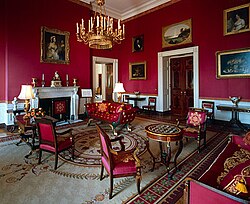
• [the program] U.S. President No. 44, Barack Obama is scheduled to take his ceremonial Oath of Office at 11:30 A.M., having taken his official O. of O. yesterday, in a private ceremony on January 20, the official I. Day. So it was for Rutherford B. Hayes, in 1877, and Ronald Reagan, too, in 1985, being as their Inaugurals fell on Sundays. As a matter of fact, Mr. Hayes was sworn in in the W.H., a presidential 1st, in the Red Room, where charming Dolley Madison once held her popular Wednesday evening receptions before the whole joint was torched by the Redcoats.
• Then Mr. Obama gives a speech - no, make that an address. Think about it, Citizens: What would you say to your divided, somewhat disheartened nation? (What would I say? Read a book. Heck, read a LOT of books. Learn what we Americans have - and haven't - been about all these years and think about what you read, for crying out loud. And just for a change, listen and THINK about what we have in common. Our history, for one thing. Our scary future, for another.)
• There's a luncheon. Click HERE for the menu! (sounds a good deal fancier than the tortilla/melted cheese & handfuls of 1. cherry tomatoes and 2. MandMs I've got planned. )
• PARADE!
• BALLS. (What would I wear? What would I wear? Gownless Evening Strap? Could we have, like, an Author Prom, a BiblioBall or something, PUH-lease??? I totally want to see Jim Murphy in a tuxedo.)
Aren't we thankful for the 20th Amendment? If only for the fact that it isn't the 2nd Amendment, which I am WAY sick of hearing about, at least the part of the argument that comes from these automatically-armed-to-the-teeth blowhards? Because at least we're not having to wait until the 4th of March for all of this hoohah. All of this glorious hoohah, celebrating that for all our bloody-minded, well-intentioned, noble, greedy, bumptious, wonderful/horrible goings-on, we Americans have managed this banged up but unbroken chain of power passing to power.
And in the spirit of that old saw, that trite-but-true wheeze about this being the first day of the rest of OUR lives, how in the heck are we going to inaugurate it? What are we prepared to do? (Despite opposition, fear, inertia, the tough, fast-changing marketplace) Ponder on our intentions. Ask what we can do for our country. And do it.
So help us God.
• A procession to the U.S. Capitol, also designed by Mr. Latrobe. At least President O. doesn't have to worry about having a godawful ride like FDR had with furious, worn-out HCH back in '33. • Joe Biden (born 20 Nov 1942, not long after Allied Forces landed in North Africa, just a few days before a hellacious fire broke out at Boston's Cocoanut Grove and killed 487 night-clubbers...Happy Warrior 'Smiley' Joe shares a birthday with Robert F. Kennedy, Alistair Cooke, and the astronomer Edwin Hubble), the 47th U.S. Vice President, once more will be sworn in to office.
• [the program] U.S. President No. 44, Barack Obama is scheduled to take his ceremonial Oath of Office at 11:30 A.M., having taken his official O. of O. yesterday, in a private ceremony on January 20, the official I. Day. So it was for Rutherford B. Hayes, in 1877, and Ronald Reagan, too, in 1985, being as their Inaugurals fell on Sundays. As a matter of fact, Mr. Hayes was sworn in in the W.H., a presidential 1st, in the Red Room, where charming Dolley Madison once held her popular Wednesday evening receptions before the whole joint was torched by the Redcoats.
• Then Mr. Obama gives a speech - no, make that an address. Think about it, Citizens: What would you say to your divided, somewhat disheartened nation? (What would I say? Read a book. Heck, read a LOT of books. Learn what we Americans have - and haven't - been about all these years and think about what you read, for crying out loud. And just for a change, listen and THINK about what we have in common. Our history, for one thing. Our scary future, for another.)
• There's a luncheon. Click HERE for the menu! (sounds a good deal fancier than the tortilla/melted cheese & handfuls of 1. cherry tomatoes and 2. MandMs I've got planned. )
 |
| The Inaugural Parade of FDR, 1941, Frank Wright |
• BALLS. (What would I wear? What would I wear? Gownless Evening Strap? Could we have, like, an Author Prom, a BiblioBall or something, PUH-lease??? I totally want to see Jim Murphy in a tuxedo.)
Aren't we thankful for the 20th Amendment? If only for the fact that it isn't the 2nd Amendment, which I am WAY sick of hearing about, at least the part of the argument that comes from these automatically-armed-to-the-teeth blowhards? Because at least we're not having to wait until the 4th of March for all of this hoohah. All of this glorious hoohah, celebrating that for all our bloody-minded, well-intentioned, noble, greedy, bumptious, wonderful/horrible goings-on, we Americans have managed this banged up but unbroken chain of power passing to power.
And in the spirit of that old saw, that trite-but-true wheeze about this being the first day of the rest of OUR lives, how in the heck are we going to inaugurate it? What are we prepared to do? (Despite opposition, fear, inertia, the tough, fast-changing marketplace) Ponder on our intentions. Ask what we can do for our country. And do it.
So help us God.
Thursday, January 17, 2013
Courage Has No Color is out 1/22!

I don’t often post about my books, but I am very excited that Courage Has No Color will launch on Tuesday, January 22nd! This is a story I started way, way back in 2003. It took ten years for me to figure out the best form for the story and accurately put all the pieces together.
This is the true story of a very little-known group of men who should be as familiar to us as any other groundbreaking group of pioneers. Led by Walter Morris, these WWII soldiers who were serving guard duty in the Army became the first black paratroopers in World War II. They also integrated the Army many months before integration was ordered AND helped fight an attack by the Japanese on the American West. Yes, you read that right.
There are a lot of personal reasons why this book has become close to my heart—23 reasons, in fact—all 17 men and 6 officers who became the first to blaze this trail. Walter Morris is at the top of that list, a man I have grown to love and am proud to call my friend. He will be 92 next week, and the minute the box of freshly bound books hit my stoop, I packed one up for him. It is beyond thrilling—after talking with him for ten years—to be able to put his own story into his hands, complete with the more than 100 photographs it took me a few years to gather. Black-and-white-and-sepia-toned needles in a myriad of haystacks. Finding them was a whole other story. Thank goodness for helpful archivists in obscure locations and engines like Zabasearch, without which I could not have found scattered relatives of soldiers who passed on long ago.
This is my second book with Candlewick, and I am so fortunate to have an amazing team to work with there. I am also happy to be able to share the brand new book trailer. The young man you will hear doing the voice-over won 2nd place in the National Poetry Out Loud contest last year, and happens to be local to me. It was wonderful to bring him in for the project.
The wonderful and beloved Ashley Bryan also became an important part of this book. He first read the picture book version in 2003 and we had poignant conversations over the years on the subjects of war and discrimination and art and joy. He read the manuscript of what became this book about a year ago and wrote the Foreword. Incredibly, he also shared his own artwork that he made during the war, when he was a stevedore in the Army. A few of those pieces now grace the pages of Courage Has No Color.
Thank you for indulging me today, as I do some blatant self-promotion, but it’s not all that often you get to shout from the rooftops that a new book baby is born! Oh, and there will be a Reading Guide for this title soon, which will include suggestions for use with Common Core.
Subscribe to:
Posts (Atom)